
The 16 Best Dog Harnesses in 2026: Tested & Reviewed

Canine Bible is reader-supported. We receive affiliate commissions via some of our links. Learn more.
Finding the best dog harness can make a big difference in your dog’s comfort, safety, and overall walking experience. I’ve found that choosing the right harness isn’t just about controlling pulling—it’s about finding a secure, comfortable fit that supports natural movement without putting unnecessary pressure on the neck or joints. With so many options available, including no-pull, step-in, and front-clip dog harnesses, knowing which design works best can be challenging. In this guide, I break down the best dog harnesses based on durability, safety, comfort, adjustability, and style to help you find the right option for your dog’s size, activity level, and walking habits. Whether you’re dealing with a strong puller, an energetic puppy, or a dog that needs extra support, my goal is to help you choose a harness that makes everyday walks safer and more enjoyable.
Best Dog Harnesses – At a Glance
Best Overall

Ruffwear
Why we recommend it: Comfortable padding, adjustable fit and front-and-back leash clips make it a versatile everyday harness for walks and outdoor adventures.
 Puppy
 Adult
 Senior
- Four adjustment points for a secure fit
- Padded chest and belly with two leash clips
- Reflective trim and integrated ID pocket
Best No-Pull

Rabbitgoo
Why we recommend it: A front leash clip helps redirect pulling, while the rear clip and adjustable padding keep everyday walks practical and comfortable.
Puppy
Adult
Senior
- Front and back leash attachment points
- Four adjustable straps and quick-release buckles
- Breathable padding and reflective detailing
Best for Puppies

Petank
Why we recommend it: Its soft, breathable mesh and simple step-in closure suit puppies learning to walk on a leash.
Puppy
Adult
Senior
- Lightweight jacquard mesh construction
- Step-in fit with hook-and-loop and buckle closures
- Reflective details and a matching leash
Best for Large Dogs

WINSEE
Why we recommend it: Reinforced materials, adjustable straps and a sturdy rear handle make everyday handling easier for larger dogs.
Adult
Senior
- Durable Oxford fabric with cushioned lining
- Front and back leash attachment points
- Reflective straps and rear control handle
Best for Hiking

Ruffwear
Why we recommend it: Supportive padding and compact storage pockets let active dogs carry small trail essentials without a full backpack.
Adult
Senior
- Two low-profile zippered storage pockets
- Five adjustment points and dual leash clips
- Padded lift handle and reflective accents
Best for Car Safety
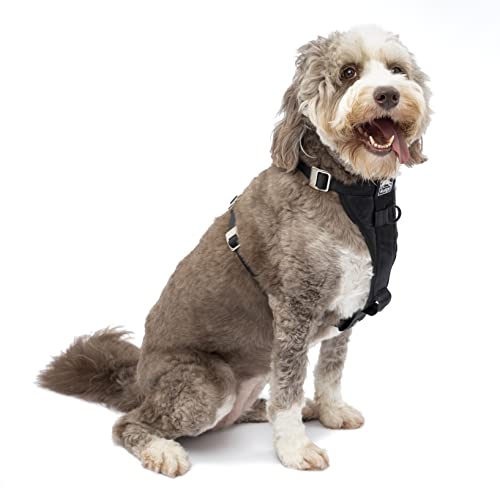
Kurgo
Why we recommend it: Crash-tested construction and an included restraint tether offer a travel-focused option that also works for walks.
Puppy
Adult
Senior
- Crash-tested by Kurgo for dogs up to 75 lb
- All-steel buckles and five adjustment points
- Includes a 10-inch vehicle-restraint tether
Best Tactical

OneTigris
Why we recommend it: Rugged nylon, multiple control handles and MOLLE webbing suit outdoor training and working-dog activities.
Adult
Senior
- Abrasion-resistant 1000D nylon construction
- Three handles and five adjustment points
- MOLLE webbing and three attachment rings
Best for Small Dogs

YIMEIS
Why we recommend it: A soft, lightweight mesh vest offers a comfortable fit for little dogs, with an included leash for everyday walks.
Puppy
Adult
Senior
- Breathable honeycomb mesh body
- Reflective detailing for added visibility
- Matching leash with anti-twist construction
Best for Running

Kurgo
Why we recommend it: A breathable, lightweight build and athletic V-neck help active dogs move comfortably alongside their owners.
Adult
Senior
- Ripstop outer fabric and breathable mesh lining
- V-neck construction and padded chest plate
- Front and back clips with rear assistance handle
Best Heavy-Duty

MADE TO ROAM
Why we recommend it: Double-layer nylon, reinforced stitching and metal buckles prioritize long-lasting construction for frequent walks.
Puppy
Adult
Senior
- Double-layer nylon with reinforced stitching
- Soft neoprene lining and four adjustable straps
- Metal quick-release buckles and control handle
Why Getting The Best Dog Harness Matters
Using a dog harness can impact canine health, behavior, and biomechanics. Here is what the science tells us:
Dog Harnesses May Reduce Neck Strain Compared to Collars
Research indicates that harnesses distribute pulling forces more evenly across a dog's body than traditional collars, potentially reducing pressure on the neck and trachea. This makes a properly fitted harness a useful option for dogs that pull or are sensitive to neck pressure.[1]
Harness Design Can Affect Shoulder Movement and Natural Stride
Studies show that certain harness designs can restrict shoulder movement and reduce stride extension. One study found that straight-front harnesses allowed greater elbow and shoulder movement, while another reported that Y-shaped harnesses were less restrictive than front-clip or chest-strap designs. These findings highlight why harness construction and fit matter, especially for active dogs.[2][3]
Proper Harness Fit Is Essential for Comfort, Safety, and Control
Research involving working dogs emphasizes the importance of properly fitted harnesses for comfort, safe movement, and injury prevention during demanding activities.[4] Studies involving service dogs also highlight how appropriate harness design and fit can support stability, handling, and communication between dogs and their handlers.[5]
How to Pick the Best Dog Harness
| Factor | What to Look For |
|---|---|
| Fit & Size | Choose a harness based on your dog’s weight and chest measurements. It should be snug but not tight — you should be able to fit two fingers under the straps. |
| Harness Type | Options include front-clip (for no-pull control), back-clip (for casual walks), and dual-clip (versatile). Step-in styles are great for dogs who dislike overhead harnesses. |
| Clip Placement | Harnesses come with different leash attachment points. Front-clip is best for pullers and training, back-clip for calm walkers and well-trained dogs, and dual-clip for versatility. |
| Adjustability | Multiple adjustment points ensure a better fit and prevent chafing or slipping out of the harness. |
| Padding & Comfort | Look for breathable mesh or foam padding to reduce friction, especially for long walks or active dogs. |
| Material & Durability | Opt for strong materials like nylon or polyester with reinforced stitching and rust-resistant metal rings. |
| Ease of Use | Quick-release buckles and step-in or overhead designs help with faster on/off times. |
| Control Features | Handles on the back and front-clip options help with training or better control in crowded areas. |
| Safety & Visibility | Reflective stitching or built-in LED strips improve safety during early morning or nighttime walks. |
Best Dog Harnesses
Here are the best dog harnesses of this year.
Ruffwear Front Range Dog Harness
Who It's For: An excellent choice for dog owners seeking the most well-rounded harness for daily walks, hikes, and other adventures.
Rabbitgoo
Who It's For: Designed for pet owners looking for an affordable and effective solution to control pulling behavior.
Petank
Who It's For: Tailored for owners of puppies or toy breeds who are in the early stages of leash training.
WINSEE
Who It's For: Designed for large and extra-large dog breeds such as German Shepherds, Great Danes, and other big dogs.
RUFFWEAR
Who It's For: Perfect for adventurous dogs and owners who enjoy hiking, camping, or long outdoor excursions.
Why we recommended it: The RUFFWEAR Everyday Dog Harness is our favorite hiking harness for its rugged durability and features tailored for outdoor use. Made from high-quality, abrasion-resistant polyester, it’s built to withstand rough terrain and frequent use. This harness combines the comfort and control of a traditional harness with the utility of a pack. The padded construction ensures your dog remains comfortable during extended hikes, while the integrated pockets allow for carrying essentials like treats, waste bags, or a collapsible water bowl. The four adjustment points ensure a snug, secure fit, even for dogs with deep chests or unique body shapes. The reflective trim and light loop enhance visibility during early morning or evening hikes.
The Kurgo Enhanced Strength
Who It's For: Designed for dog owners who prioritize their pet's safety during car travel.
Why we recommended it: The Kurgo Enhanced Strength Tru-Fit Smart Dog Harness has undergone crash testing for dogs, providing peace of mind for owners concerned about car safety. Its durable construction includes metal buckles and a padded chest plate, ensuring both security and comfort during travel. Additionally, the harness doubles as a no-pull walking harness, making it versatile for daily use. The included tether attaches to your car’s seatbelt system, keeping your dog safely in place without restricting their ability to sit or lie down.
OneTigris X DESTROYER
Who It's For: Particularly suitable for working dogs or those involved in rigorous exercises and training, offering enhanced control and functionality.
Why we recommended it: The OneTigris X DESTROYER dog harness is constructed from rugged 1000D nylon fabric, known for its excellent durability and resistance to dirt, water, and abrasion. The design features a Y-shaped structure with a front chest piece, enabling easy on and off, and preventing the harness from sliding. The harness is fully adjustable, featuring five adjustment points at the neck, chest, and abdomen, to ensure a secure and comfortable fit for dogs of various body types.
YIMEIS
Who It's For: Specifically designed for small dogs such as breeds like Chihuahuas, Pomeranians, Yorkies, and other petite pups.
Why we recommended it: The YIMEIS Dog Harness for small dogs features a soft mesh construction that provides breathability and comfort, ensuring dogs will not feel repulsive or uncomfortable when wearing it and preventing overheating during warm days. The 360-degree all-over reflective strip design enhances visibility in low-light conditions, promoting safety during evening strolls. Owners appreciate the adjustable straps, which allow for a customized fit, ensuring that the harness remains snug without causing discomfort.
Kurgo Journey Air Dog Harness
Who It's For: Perfect for dog owners who love to go on runs with their dogs.
Why we recommended it: The Kurgo Journey Air Dog Harness is a great training aid for first-time dog runners, and it’s safer on the dog’s body because it distributes the pressure more evenly across their body instead of concentrating it on the neck like a collar. We recommend the Kurgo Journey Air Dog Harness due to its durable and breathable construction, which includes a ripstop fabric outer layer and a breathable mesh inner layer. If your dog hasn’t mastered leash manners and is always trying to wriggle out of his collar and constantly pulling, a dog running harness makes it easier to control and manage the dog.
MADE TO ROAM
Who It's For: Dog parents who prioritize durability and safety, as its robust construction can handle strong pullers and rough terrain.
Why we recommended it: The MADE TO ROAM Premium Explorer Harness is made from premium, weather-resistant materials, including reinforced nylon and stainless steel hardware; it’s built to withstand the toughest conditions. Its Y-shaped design promotes unrestricted shoulder movement, supporting better posture and joint health. The four adjustable straps—two on the chest and two on the torso—ensure a tailored fit for dogs of various sizes and shapes. Additionally, the harness is equipped with a sleek, faux leather handle, providing extra control when needed. This harness not only performs well but also boasts a modern aesthetic.
Other Dog Harnesses
How to Choose the Best Harness for Your Dog
Choosing the right dog harness depends on your dog's size, body shape, activity level, and walking habits. A well-designed harness should provide secure control without restricting natural movement or putting unnecessary pressure on the neck. Different designs work better for different needs, from everyday walks to running, hiking, and leash training.
| Dog's Needs | Recommended Harness | Key Benefits | What to Consider |
|---|---|---|---|
| Everyday walks | Padded back-clip or dual-clip harness. | Comfortable support and easy leash attachment. | Choose a lightweight, adjustable design. |
| Dogs that pull | Front-clip or dual-clip no-pull harness. | Helps redirect pulling and improves control. | Combine with positive-reinforcement training. |
| Small dogs | Lightweight mesh or padded vest harness. | Reduces bulk and pressure on delicate bodies. | Avoid oversized buckles and heavy materials. |
| Large, strong dogs | Reinforced harness with sturdy hardware. | Provides durability and better handling. | Look for secure buckles and strong stitching. |
| Running and hiking | Breathable, adjustable Y-front harness. | Supports active movement and outdoor comfort. | Avoid designs that restrict shoulder movement. |
| Escape-prone dogs | Escape-resistant, multi-strap harness. | Helps prevent slipping backward out of the harness. | Check security; no harness is escape-proof. |
| Growing puppies | Lightweight harness with multiple adjustments. | Accommodates changing body measurements. | Measure frequently and replace when outgrown. |
| Car travel | Crash-tested vehicle safety harness. | Provides a purpose-designed restraint system. | Check testing limits and vehicle compatibility. |
Monitoring Your Dog's Comfort and Fit in a Harness
After introducing a new harness, pay attention to how your dog walks, runs, and behaves while wearing it. Start with short, supervised sessions and use treats or praise to build positive associations. Watch for scratching, hesitation, changes in stride, or attempts to remove the harness. After each walk, inspect the chest, armpits, and shoulders for redness, rubbing, or irritated skin. These signs may indicate that the harness needs adjustment or is unsuitable for your dog's body shape.
Regularly reassess the fit, especially for growing puppies, dogs experiencing weight changes, and long-haired breeds whose coats may conceal pressure points. Check for loose buckles, worn straps, and shifting during movement. If your dog develops persistent skin irritation, limping, or discomfort despite proper adjustments, stop using the harness and consult your veterinarian to rule out an underlying medical issue.
Frequently Asked Questions
The Bottom Line
A poorly chosen harness can turn every walk into a frustrating tug-of-war, or worse, put your dog at risk of injury. But the right harness? It transforms walks into effortless, stress-free moments of bonding. So, don’t settle for a one-size-fits-all solution. Please measure your dog, select the right fit, and choose a harness tailored to their specific needs. Your pup deserves comfort, safety, and freedom to move. Check your dog’s harness today—does it truly fit, or is it time for an upgrade? After all, would you go for a run in shoes two sizes too small? Then why let your dog suffer in an ill-fitting harness?
A great harness is just the start. Pair it with gear that supports your dog’s entire adventure. Keep their paws pain-free during walks with the best dog nail clippers to avoid splits that could sideline their outdoor fun. Protect their health with trusted pet insurance—because even the safest harness can’t prevent every accident. Let them recharge post-walk on an indestructible dog bed, built to survive chew-happy pups who’ve still got the energy to burn. If your dog thrives in a harness, channel their enthusiasm into dog sports like canicross, where gear and grit go hand-in-paw. For days when the weather ruins your walk plan, a dog treadmill keeps their legs moving safely indoors. And timing matters: learn whether to walk before or after meals to avoid bloating, because no harness can compensate for poor timing.
Every choice, from harness to bedtime, shapes your dog’s safety and joy. So clip on that perfectly fitted gear, take a deep breath, and step outside, knowing you’ve covered every detail. Your dog isn’t just ready for a walk—they’re prepared for a life of adventure, one comfortable, tail-wagging stride at a time.
Sources
- Dog Pulling on the Leash: Effects of Restraint by a Neck Collar vs. a Chest Harness
- The Influence of Harness Design on Forelimb Biomechanics in Pet Dogs
- A Systematic Review of the Biomechanical Effects of Harness and Head-Collar use in Dogs
- Effect of harness design on the biomechanics of domestic dogs (Canis lupus familiaris)
- Harness research