
Allergies in Dogs: Symptoms, Types, Causes, Signs & Prevention

Canine Bible is reader-supported. We receive affiliate commissions via some of our links. Learn more.
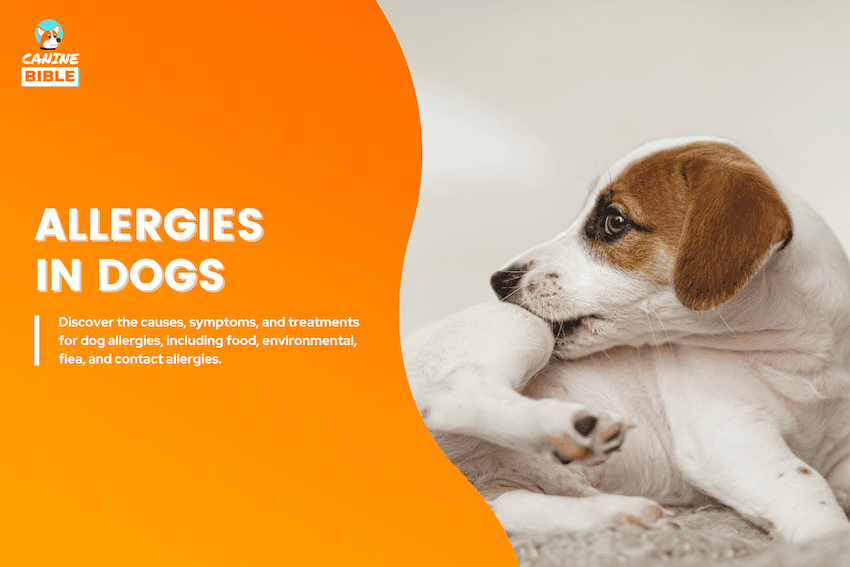
Allergies are among the most common—and frustrating—health issues affecting dogs today. From chronic itching to digestive distress, allergic reactions can significantly impact your dog’s quality of life and leave owners feeling helpless. Unfortunately, the symptoms of allergies often mimic other conditions, making them difficult to diagnose and manage without a comprehensive understanding. In this guide, we’ll take an in-depth look at everything you need to know about allergies in dogs. Whether your pup is constantly licking their paws, sneezing through spring, or reacting to certain foods, this article will help you pinpoint the signs, understand the root causes, and take steps toward long-term relief. We’ll explore the different types of dog allergies and break down each one by symptoms, causes, prevention tips, and available treatments.
What Are Allergies in Dogs?
Allergies in dogs occur when the immune system overreacts to a normally harmless substance known as an allergen. These allergens—such as food proteins, pollen, dust mites, or insect bites—can be ingested, inhaled, or come into contact with the skin, triggering an inflammatory response. This immune reaction leads to common allergy symptoms like itching, redness, ear infections, or digestive issues. While dogs aren’t born with allergies, the predisposition is often hereditary. Most allergic responses develop over time through repeated exposure, a process known as sensitization. Once sensitized, a dog’s immune system may overreact to even minimal exposure.
It’s important to distinguish between:
- Allergies: An immune system overreaction (e.g., to food or environmental triggers)
- Intolerances or sensitivities: Non-immune responses, like trouble digesting certain ingredients
Both can cause symptoms, but true allergies tend to be more severe and persistent, and require targeted treatment.


Predisposed Breeds to Allergies
According to the Merck Veterinary Manual, dog breeds predisposed to developing allergies include:
- Chinese Shar-Peis
- Wirehaired Fox Terriers
- Golden Retrievers
- Dalmatians
- Boxers
- Boston Terriers
- Labrador Retrievers
- Lhasa Apsos
- Scottish Terriers
- Shih Tzus
- West Highland White Terriers
Other breeds also include pugs, Maltese terriers, Pekingese, Bichon Frises, German Shepherds, Pitbulls, Yorkies, and Poodles, among others. However, any dog of any breed (or mixed breeds) can be allergic. The age of onset is generally between 6 months and 3 years.
Types of Allergies in Dogs
Dogs can suffer from several types of allergies, each with distinct causes, symptoms, and treatment approaches. The most common types include:
- Food Allergies
- Environmental Allergies (Atopic Dermatitis / Seasonal Allergies)
- Flea Allergies Allergies
- Contact Allergies (Contact Dermatitis)
- Drug Allergies (Medications / Antibiotics)
- Severe Allergies (Anaphylactic Shock)
Dog Food Allergies
Dog food allergies are estimated to affect 1% to 2% of the dog population and account for 10% of all allergies in dogs.[1] Dogs’ food allergies are predominantly caused by food allergens such as proteins. While proteins are the most common source of allergens, virtually any food ingredient can produce an allergy. Substances like additives, colorants, and preservatives can also be responsible. Food allergies can appear at any age.


Common Causes
| Dog Food Allergen | Percentage of Dogs With Reported Reaction |
|---|---|
| Beef | 34% |
| Dairy Products | 17% |
| Chicken | 15% |
| Wheat | 13% |
| Soy | 6% |
| Lamb | 5% |
| Corn | 4% |
| Egg | 4% |
| Pork | 2% |
| Fish | 2% |
| Rice | 2% |
Source: BMC Veterinary Research
Symptoms
- Gastrointestinal and digestive issues
- Skin issues (Itching, hot spots, skin rashes, scaly and/or oily skin & a gamut of skin reactions)
- Vomiting
- Diarrhea
- Mucus in stool
- Straining to pass stool
- Abdominal pain
- Swollen face
- Ear or paw infections
Secondary symptoms can occur, such as hyperactivity, weight loss, lack of energy, and even aggression. One study showed that non-allergic dogs have around 1.5 bowel movements per day, whereas some dogs with food allergies may have 3 or more per day. So, if you notice your pup going potty more frequently than normal, it may be a sign of a food allergy.
Treatment, Prevention & How to Detect It
| Category | Details |
|---|---|
| How to Tell |
|
| Treatment |
|
| Prevention |
|
Environmental Allergies (Atopic Dermatitis / Seasonal Allergies)
Environmental allergies—also known as atopic dermatitis or seasonal allergies—are caused by a dog’s immune system overreacting to environmental allergens. These allergies often manifest in early adulthood and tend to worsen with age and repeated exposure. Dr. Justin Shmalberg, a DVM and veterinary nutritionist at Nom Nom, states that approximately 25% to 33% of dogs with food allergies also have environmental allergies, which can produce similar and sometimes indistinguishable symptoms.
Common Environmental Allergens
- Indoor pollutants (e.g., cigarette smoke, cleaning sprays)
- Tree, grass, and weed pollen (especially during spring and fall)
- House dust mites
- Mold and mildew
- Dander from other animals
A study conducted by the University of California-Davis found that summer and fall were peak seasons for allergic reactions to mold, trees, and cultivated plants. These allergens frequently led to skin conditions and ear infections in dogs.[2] In particular, exposure often results in otitis externa, a chronic inflammation of the external ear canal, along with lesions on the feet. Other studies have shown similar nasal congestion symptoms in humans and dogs, such as those caused by ragweed pollen exposure.[3]
Symptoms
- Dermatitis (Irritated, inflamed, or infected skin)
- Red or itchy ears
- Scratching and biting
- Watery eyes
- Sneezing
- Runny noses
- Excessive shedding
- Paw licking
- Scooting or licking the anal region
- Respiratory issues
| Category | Details |
|---|---|
| How to Tell |
|
| Treatment |
|
| Prevention |
|
Flea Allergy Dermatitis (FAD)
Flea Allergy Dermatitis (FAD) is one of the most common skin conditions in dogs and is caused by an allergic reaction to flea saliva. Even a single flea bite can trigger an intense allergic response in sensitized dogs, leading to persistent discomfort and skin inflammation.
Causes
FAD occurs when a dog’s immune system overreacts to proteins in flea saliva. This hypersensitivity typically develops after repeated exposure to fleas over time. While any dog can develop FAD, some breeds and individuals are genetically predisposed to stronger allergic responses.
Symptoms
- Intense itching and scratching, particularly near the base of the tail, thighs, abdomen, and groin
- Hair loss and hot spots (moist, inflamed skin lesions)
- Red, inflamed skin or scabs from excessive scratching
- Secondary skin infections (bacterial or yeast)
- The presence of flea dirt or actual fleas may or may not be visible
Treatment, Prevention & How to Detect It
| Category | Details |
|---|---|
| How to Tell |
|
| Treatment |
|
| Prevention |
|
Contact Allergies (Contact Dermatitis)
Contact allergies, also known as contact dermatitis, occur when a dog’s skin reacts to a substance it comes into direct physical contact with. Unlike environmental or food allergies, which are triggered systemically, contact allergies are localized to the area of skin that touched the irritant or allergen.
Causes of Contact Dermatitis
Common culprits include:
- Plants such as poison ivy, poison oak, or certain grasses
- Household cleaning products
- Carpet deodorizers or cleaners
- Lawn chemicals or fertilizers
- Certain shampoos, soaps, or topical medications
- Rubber, plastic, or synthetic fibers (e.g., in dog beds, toys, collars, bowls)
Contact allergies can be either irritant contact dermatitis (caused by direct damage to the skin from a harsh chemical) or allergic contact dermatitis (immune-mediated response to a specific substance).
Symptoms
- Thickened, crusty, or darkened skin with chronic exposure
- Redness, itching, or hives
- Hair loss or sores in localized patches
- Inflamed skin on the belly, paws, groin, or chin
- Recurrent paw licking or face rubbing
Treatment, Prevention & How to Detect It
| Category | Details |
|---|---|
| How to Tell |
|
| Treatment |
|
| Prevention |
|
Drug Allergies (Medications / Antibiotics)
Drug allergies in dogs occur when the immune system overreacts to a medication, viewing it as a harmful substance. These reactions can range from mild skin irritation to life-threatening anaphylaxis. Antibiotics are among the most common culprits, but any drug such as over-the-counter (OTC) can also trigger allergies in dogs.
Common Drug Allergy Triggers
- Antibiotics (e.g., penicillin, amoxicillin, sulfonamides)
- Nonsteroidal anti-inflammatory drugs (NSAIDs) (e.g., carprofen, meloxicam)
- Vaccines
- Topical medications (e.g., ointments, flea treatments)
- Anesthetics or sedatives
- Deworming agents
- Double-dosing (incorrect dosage)
- Drug interaction
- Drug ingredient allergens
Symptoms
Drug allergy symptoms can appear within minutes to several hours after administration, and in some cases, may be delayed by a few days. Clinical signs include:
- Hives or skin rashes
- Facial swelling (especially around the eyes, lips, or muzzle)
- Vomiting or diarrhea
- Difficulty breathing
- Itching or scratching
- Lethargy or collapse (in severe cases of anaphylaxis)
To determine if your dog is sensitive to certain medications, which can be life-saving in emergency care or routine treatments. EasyDNA MDRI test is a great option.
Treatment, Prevention & How to Detect It
| Category | Details |
|---|---|
| How to Tell |
|
| Treatment |
|
| Prevention |
|
Severe Dog Allergies (Anaphylactic Shock)
Anaphylactic shock is a rare but life-threatening allergic reaction in dogs that occurs rapidly after exposure to an allergen. It is considered a veterinary emergency that requires immediate intervention. While mild to moderate allergies in dogs typically involve skin and ear symptoms, anaphylaxis affects multiple organ systems—especially the cardiovascular and respiratory systems.
Common Triggers of Anaphylaxis in Dogs
- Insect bites or stings (e.g., bees, wasps, fire ants)
- Vaccinations
- Medications (especially antibiotics or anesthetics)
- Certain foods or food additives
- Blood transfusions
- Severe reactions to environmental or contact allergens (rare)
Symptoms of Anaphylactic Shock
Symptoms can develop within minutes of exposure and may include:
- Sudden collapse or weakness
- Difficulty breathing or wheezing
- Swollen face, muzzle, lips, or throat
- Pale gums or bluish tongue
- Vomiting or diarrhea
- Seizures or disorientation
- Cold extremities and rapid heart rate
- Loss of consciousness
⚠️ Emergency Alert: If your dog shows any of these symptoms, seek emergency veterinary care immediately. Anaphylaxis can lead to death if not treated within minutes.
Treatment, Prevention & How to Detect It
| Category | Details |
|---|---|
| How to Tell |
|
| Treatment |
|
| Prevention |
|
Skin Allergies Are a Symptom—Not the Root Cause
Skin allergies in dogs aren’t a disease category on their own—they are a clinical symptom of an underlying allergic condition. In veterinary dermatology, this symptom is broadly referred to as allergic dermatitis. The root cause can stem from one or more types of allergies: environmental, flea-related, food-based, contact-induced or other type of allergy.
Why Do Allergies Show Up on the Skin?
In dogs, allergic reactions typically manifest through the skin rather than through respiratory symptoms as seen in humans. This is because dogs have a thinner epidermal barrier and a higher density of immune cells in the skin, making it the body’s first line of defense—and attack—against allergens. When exposed to a trigger, the dog’s immune system releases histamines and other inflammatory compounds that lead to itching, redness, inflammation, and lesions. Over time, constant scratching or licking can result in secondary infections, hair loss, and thickened skin.
If your dog is showing signs of a skin allergy, it’s critical to determine the underlying cause rather than simply treating the symptom.
How to Prevent Dog Allergies
While not all allergies can be prevented—especially those with a genetic basis—being proactive can reduce severity, delay onset, and improve your dog’s quality of life. Here are key steps every pet owner can take:
🔬 1. Perform an Allergy Test
- Use a vet-supervised allergy test (intradermal or blood test) or a trusted at-home dog allergy test to identify sensitivities early.
- Helps uncover environmental, food, and contact allergens before symptoms worsen.
🧪 2. Conduct a Food Elimination Trial
- If food allergies are suspected, switch to a limited-ingredient or novel protein diet under veterinary guidance for 8–12 weeks.
- Reintroduce foods gradually to pinpoint the trigger.
🐜 3. Use Year-Round Flea & Tick Prevention
- Flea Allergy Dermatitis (FAD) is one of the most common skin allergy triggers.
- Use vet-approved flea preventatives consistently—even indoors or during colder months.
🧼 4. Bathe Regularly With Hypoallergenic Shampoos
- Weekly or bi-weekly baths help remove allergens (pollen, dust, mold) from your dog’s skin and coat.
- Use gentle, oatmeal-based or medicated shampoos for sensitive skin.
🧹 5. Maintain a Clean Living Environment
- Vacuum and mop frequently using pet-safe cleaners.
- Wash bedding, toys, and bowls weekly in hot water.
- Use HEPA air purifiers to reduce indoor allergens like dust mites and mold spores.
🌾 6. Limit Outdoor Allergen Exposure
- During peak allergy seasons (spring/fall), wipe your dog’s paws and belly after walks.
- Avoid outdoor play during high-pollen times (early morning or windy days).
🩺 7. Schedule Routine Vet Checkups
- Early detection of chronic allergies can prevent complications like skin infections, ear issues, or hot spots.
- Vets may recommend antihistamines, Apoquel, Cytopoint, or immunotherapy depending on severity.
🍽️ 8. Feed a High-Quality, Balanced Diet
- Nutrition plays a critical role in immune health and skin barrier integrity.
- Include omega-3 fatty acids, probiotics, and vitamins A, E, and zinc to support skin health.
🧴 9. Switch to Pet-Safe Cleaning and Grooming Products
- Avoid synthetic fragrances, harsh soaps, and cleaning agents that can irritate sensitive dogs.
- Always rinse shampoo thoroughly to avoid residue buildup.
📔 10. Keep an Allergy Log or Tracker
- Helps identify patterns and triggers more quickly.
- Note changes in diet, environment, or products used when flare-ups occur.
The Bottom Line
Dog allergies are more than just occasional itching—they can significantly impact your dog’s comfort, health, and quality of life. Whether triggered by food, fleas, environmental allergens, or contact irritants, identifying the root cause is key to effective management. While some allergies require lifelong care, many can be controlled with early detection, proper treatment, and proactive prevention strategies.
As a responsible pet parent, staying informed and working closely with your veterinarian will empower you to make the best choices for your dog’s long-term well-being. From allergy testing and nutritional support to flea prevention and daily care routines, every small step contributes to a happier, healthier, and more allergy-free life for your dog.
Sources
Canine Bible uses only high-quality sources, including peer-reviewed studies, to support the facts within our articles. Read our editorial process and product review methodology to learn more about how we fact-check, test products, and keep our content accurate, reliable, and trustworthy.