A few extra treats a day may not seem like much, but for a small dog, they can add up like a person snacking on several desserts between meals. Low-calorie dog treats matter because they let you reward good behavior, support training, and show affection without quietly pushing your dog toward weight gain. For dogs prone to obesity, joint strain, diabetes, or low activity levels, choosing lighter treats can make a real difference in their long-term health. The best options are not just low in calories—they should still be satisfying, made with dog-safe ingredients, and easy to portion. In this guide, we’ll reveal the best low-calorie dog treats, what to look for on the label, and how to reward your pup without overfeeding.
What Makes a Dog Treat Low in Calories?
A dog treat is low in calories when it delivers a small amount of energy per piece or serving, usually because it is made in a smaller portion size, uses leaner ingredients, contains more moisture or air, or avoids calorie-dense additions like heavy fats and sweet coatings. The most useful number to check is calories per treat, not just the front-label claim, because two “low-calorie” treats can differ a lot in size. For training, tiny treats with just a few calories each are often more practical than larger snacks that need to be split. A good low-calorie treat should still be appealing enough to motivate your dog, but light enough to fit into their daily calorie limit without replacing balanced meals.
Can Low-Calorie Dog Treats Help With Weight Management & Training
Low-calorie dog treats can help with weight management because they let you keep rewarding your dog while reducing extra calories from snacks. This matters because treats can quietly push dogs into a calorie surplus, especially when used often during training or daily routines. A veterinary review on pet obesity notes that limiting treats to about 10% of total calorie intake, along with calorie control and exercise, can support successful body-weight management.[1]
They can also make training more practical because dogs often need repeated rewards to learn new cues, leash skills, recall, or polite manners. Small, low-calorie treats let you reward frequently without turning a short session into a high-calorie snack break. For best results, use tiny pieces, count them within your dog’s daily calorie allowance, and choose treats that are motivating but not high in fat. Dogs with obesity, diabetes, pancreatitis risk, or other medical concerns should follow a veterinarian-guided weight and treat plan.
What to Look for Beyond Calories
What to Check
Best Choice
Why It Matters
Watch Out For
Ingredient clarity
Named foods like chicken, beef, fish, pumpkin, or oats.
Helps you know exactly what your dog is eating.
Vague flavors or unnamed meat ingredients.
Treat size
Mini bites or pieces that break easily.
Makes portion control easier.
Large treats that add up quickly.
Texture
Soft, crunchy, or freeze-dried based on your dog’s needs.
Matches chewing comfort and training use.
Very hard treats for seniors or small dogs.
Fat level
Low to moderate fat formulas.
Better for weight-conscious dogs.
Greasy, cheese-heavy, or bacon-style treats.
Digestive fit
Simple or limited-ingredient recipes.
Useful for sensitive stomachs.
Too many new ingredients at once.
Purpose
Training, dental, senior, or weight-control treats.
Helps the treat match your goal.
Choosing by flavor only.
Added sugars
Unsweetened or naturally flavored treats.
Keeps snacks from becoming dessert-like.
Syrups, added sugar, or xylitol.
Dog-safe extras
Carrots, pumpkin, apple, peas, or blueberries.
Adds variety without heavy ingredients.
Grapes, raisins, onions, garlic, or seasoning.
Remember to ALWAYS consult with your vet before making any changes that could affect your dog’s health, nutrition, or well-being. If you can’t reach your vet, you can chat live with a registered online veterinary professional via our online vet chat or video chat support(24 hours a day, 7 days a week). Or use Chewy’s online vet services(6 a.m. – midnight ET). Additionally, at-home dog gut health tests can analyze your dog’s microbiome, offering insights into which nutrients their diet should include. Similarly, at-home dog allergy testing kits can identify ingredients that may not be suitable for your dog, enabling you to choose the right diet and care plan to support optimal digestion, nutrition, and health.
Best Low-Calorie Dog Treats
Here are the best low-calorie dog treats of this year.
Best Overall Low-Calorie Dog Treats
4.9
★★★★★
The Honest Kitchen
Who It’s For: Dog owners who want a lighter everyday treat that feels rewarding, fits most routines, and helps avoid unnecessary extra calories.
Why we recommended it:The Honest Kitchen Human Grade Dog Treats offer a practical balance of flavor, training usability, and calorie control. The tiny format makes them easy to give repeatedly when reinforcing commands or filling snuffle mats. Beef and salmon provide animal-based protein, while salmon naturally supplies DHA, a fatty acid tied to brain and nervous system support. Chickpeas add plant-based structure and a bit of slow-digesting carbohydrate without making the treat feel heavy. The soft chew creates an easier bite while still giving the treat a rewarding texture. Because this is intended for intermittent or supplemental feeding only, it works best as a reward layered into an already balanced diet.
What sets it apart from competitors: The Honest Kitchen’s human-grade framework requires every ingredient to meet human-food safety and quality standards. Its supplier requirements also go beyond a basic ingredient list, including human-edible status from harvest through production, Good Manufacturing Practices, signed Human Food Grade Guarantees, and supplier audits.
Get 50% OFF with code 50CANINE (or 40CANINE for orders under $30)—Use thislink to get started.
Best Low-Calorie Dog Treats for Training
4.8
★★★★★
Pupford
Who It’s For: Dog owners who need small, tasty rewards that keep dogs focused during lessons without adding too many calories per session.
Why we recommended it:Pupford Freeze Dried Training Treats for Dogs are built for high-repetition training, where reward size matters as much as taste. The small pieces make it easier to reinforce behavior quickly without stopping the flow of a lesson. Their freeze-dried texture keeps them lightweight and easy to carry, so they fit well in a pouch or pocket during walks and classes. The recipe range includes meat, fish, and plant-based options, giving the line more flavor variety without relying on sugary or greasy snacks. The low-calorie format helps reduce the risk of treat stacking, which can happen when dozens of rewards are used in one session. From a nutrition standpoint, freeze-drying removes moisture while preserving concentrated aroma, which helps make the treat feel more rewarding even in a tiny portion.
What sets it apart from competitors: Pupford pairs its treats with free training content, so the reward is part of a broader behavior-building system rather than just a snack. The standard bag also includes hundreds of pieces, creating a more training-specific format than many low-calorie treats that still require cutting, breaking, or portioning before use.
Best Low-Calorie Dog Treats for Muscle Development
4.6
★★★★★
Redbarn
Who It’s For: Dogs who need protein-rich treats that support lean muscle while keeping calories controlled for active or athletic lifestyles.
Why we recommended it:Redbarn Pet Products All-Natural Training Treats are designed as protein-focused rewards that fit the muscle development category without feeling like a full snack. The recipes include options such as beef, chicken, and fish, adding variety while keeping the format centered on animal-based protein. These treats are gently air-dried and oven-roasted, a process that helps reduce moisture while preserving the natural nutrition of the meat or fish. That matters because protein provides amino acids, which dogs use to maintain and repair lean tissue after activity. The small training-treat format also helps with portion control when rewards are used repeatedly during exercise or obedience work. Added vitamins and minerals give the treat more structure than a simple single-note snack, while the crunchy texture can make it feel satisfying without needing a large serving.
What sets it apart from competitors: Redbarn’s quality-control structure is unusually robust for the treat category, with company-owned labs performing more than 10,000 tests per month and finished batches tested for safety and quality. Its SQF certification also gives this line a verifiable manufacturing-standard advantage, since SQF certification is not required across the pet treat industry.
Best Low-Calorie Dog Treats for Weight Loss
4.5
★★★★★
Bil-Jac
Who It’s For: Dog owners helping their pups slim down while still offering satisfying rewards that feel like a treat, not a compromise.
Why we recommended it:Bil-Jac Slim Jacs Low-Fat Dog Treats offer a lighter reward format without removing treats from the routine. The small piece size helps with portion control, which is important during weight loss because treat calories can add up quickly. Their soft, moist texture makes them easy to chew while still feeling more rewarding than a plain biscuit-style snack. The formula keeps fat controlled while still offering a savory, high-value taste that helps maintain interest during training. From a physiological standpoint, a lower-fat treat can help reduce excess calorie density while still giving the dog a satisfying eating experience. Because Bil-Jac Slim Jacs are intended for intermittent feeding, they work best as measured rewards within a complete weight-management plan.
What sets it apart from competitors: Bil-Jac uses a proprietary slow-cooking process rather than a standard dry biscuit approach, giving Slim Jacs a softer, more aromatic reward format. That production method gives it a practical texture and portioning distinction in the weight-loss treat category, where many options lean crunchy, bland, or harder to manage for frequent rewards.
Best Low-Calorie Freeze-Dried Dog Treats
4.7
★★★★★
Open Farm
Who It’s For: Dog owners who want simple, high-protein treats with a light texture and concentrated flavor dogs get excited about.
Why we recommended it:Open Farm Cubes Dog Treats are freeze-dried raw cube treats made with one poultry or meat organ ingredient per recipe, giving dogs a focused reward without fillers. The available cube options include poultry, beef liver, lamb liver, lamb lung, and chicken liver, so the line offers variety without moving into overly complex formulas. Freeze-drying removes moisture while helping preserve natural nutrition and flavor, so the cubes stay lightweight but still smell rewarding to dogs. That matters during training because aroma can increase motivation without needing a large portion. The cubes can be served as rewards, broken into smaller pieces for training, or used as a meal topper when extra interest is needed. They are intended for intermittent or supplemental feeding only, so they should sit alongside a complete diet rather than replace balanced meals.
What sets it apart from competitors: Open Farm’s lot-code transparency gives these cubes a measurable edge, since each bag can be traced to show ingredient origin, safety test results, and related sourcing details. The line also includes product-level environmental reporting, including carbon footprint estimates and How2Recycle packaging guidance, which is still uncommon in everyday dog treats.
Best Low-Calorie Dog Treats for Senior Dogs
4.6
★★★★★
Get Naked
Who It’s For: Senior dogs who need gentle, lower-calorie treats that are easy to enjoy and better suited for slower, less active days.
Why we recommended it:Get Naked Biteables Senior Health Soft Dog Treats combine a soft texture with a small serving size, making daily rewarding easier to manage. The chewable format gives the treat an easier bite than dense biscuits or large crunchy rewards. Each treat is kept very low in calories, which matters because lower activity can make extra snacks show up quickly on the scale. The formula includes sweet potatoes and turmeric, giving it a more purposeful ingredient profile than a plain soft chew. From a practical health angle, the soft, moisture-containing texture reduces chewing effort while still giving dogs a satisfying reward experience. Because these are treats rather than a complete diet, they work best as measured extras alongside balanced daily nutrition.
What sets it apart from competitors: Get Naked pairs New Zealand green-lipped mussel, used here for heart and brain support, with natural chondroitin for joint support. That dual functional focus gives it more targeted aging-care support than many low-calorie soft treats that mainly emphasize texture, flavor, or calorie count.
Best Low-Calorie Soft Dog Treats
4.5
★★★★★
Buddy Biscuits
Who It’s For: Dogs who prefer tender, easy-to-chew rewards that are gentle on the mouth and simple to portion for daily use.
Why we recommended it:Buddy Biscuits Trainers Training Treats are made for frequent, bite-sized rewarding without turning each session into a heavy snack. Their soft and chewy texture is easy for dogs to eat quickly, which helps keep training moving without long chewing breaks. The treats come in several savory recipe options, giving the line variety while staying in the same small-format training style. Each bite is intentionally tiny, so repeated rewards are easier to manage during leash practice, recall work, or basic obedience. The formula uses a meaty base with supporting ingredients like peas, potatoes, egg, flaxseed meal, brown rice, and sweet potatoes. From a practical nutrition angle, the small calorie load helps reduce “treat stacking,” where many little rewards quietly add up over the day.
What sets it apart from competitors: The 500-count pouch gives Buddy Biscuits Trainers a true training-first structure, not just a soft snack repackaged for rewards. That high piece count makes repeated sessions easier to manage without cutting treats into smaller pieces or constantly recalculating portions.
Best Low-Calorie Crunchy Dog Treats
4.8
★★★★★
Charlee Bear
Who It’s For: Dogs who love a satisfying crunch, and owners who want a lighter snack that still feels fun and rewarding.
Why we recommended it:Charlee Bear Dog Training Treats are a crunchy option for frequent rewards without a heavy snack load. The pieces are small and crisp, so dogs can chew them quickly and return attention to the next cue. Charlee Bear offers several recipe styles, including Original Crunch and Grain Free Crunch, with flavor options built around combinations of meat, cheese, fruit, and vegetables. The baked texture gives the treat a satisfying snap while keeping the format dry and easy to handle. From a training standpoint, that matters because rewards need to be fast, motivating, and portion-friendly. The low-calorie design helps reduce the risk of overfeeding when several treats are used in one session.
What sets it apart from competitors: The Pocket Perfect design gives Charlee Bear a practical edge because the treats are made to be carried in a pocket without crumbling, staining, or leaving a strong smell. That structure makes them easier to use during walks, classes, and quick reward moments than many crunchy treats that are messy, oily, or too large for repeated feeding.
Best Low-Calorie Natural Dog Treats
4.7
★★★★★
Smart Cookie
Who It’s For: Dog owners who prefer simple, recognizable ingredients and want a lighter treat without unnecessary fillers or artificial extras.
Why we recommended it:Smart Cookie Healthy Soft Dog Treats are soft, chewy rewards made with limited ingredients and a grain-free structure. The recipe range includes options built around proteins such as duck, rabbit, trout, wild boar, and shrimp, paired with simple produce-based ingredients. That combination gives the line variety while keeping each formula relatively straightforward. The soft texture makes the treat easy to break into smaller pieces, which helps with training portions and smaller reward sizes. The lower-fat profile on listed recipes helps keep the treat lighter, while the chewy texture still gives dogs a more satisfying reward than a crumbly biscuit. The moisture level also helps create a tender bite, while the limited-ingredient structure keeps the formula more focused than many soft treats with longer ingredient panels.
What sets it apart from competitors: Smart Cookie’s regional, small-batch approach gives the line a more specialized structure than many mass-market natural treats. Its lineup leans into less-common protein-and-produce pairings while still keeping the treats soft, bite-sized, and low in calories, which is a harder combination to find in everyday chewy rewards.
Best Low-Calorie Human-Grade Dog Treats
4.6
★★★★★
Full Moon
Who It’s For: Ideal for dog owners seeking low-calorie treats made with human-grade ingredients and a cleaner, food-first feel.
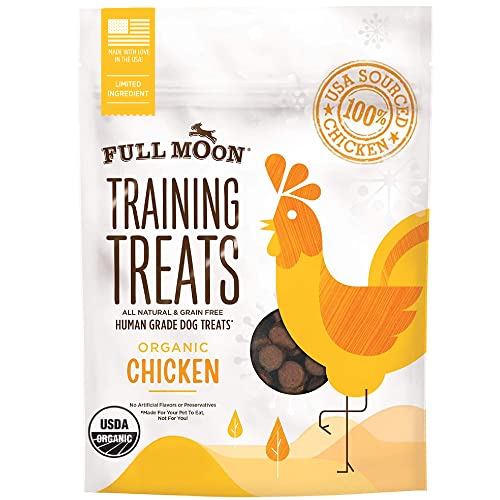
Why we recommended it:Full Moon USDA Organic Training Treats offer small rewards with a cleaner, food-first feel. The training-size pieces are easy to portion, which helps during repeated cue work, leash practice, or puppy training. Full Moon lists these treats as 100% human-grade and made with organic ingredients, including an organic animal-protein base and supporting ingredients such as flaxseed, celery, paprika, and rosemary extract. The soft, chewy texture gives the treat a gentler bite than dry biscuits. From a nutrition standpoint, the moderate protein and fat profile gives the treat enough reward value without turning each bite into a heavy snack. The formula is grain-free and made without glycerin, fillers, corn, wheat, soy, artificial preservatives, colors, or flavors.
What sets it apart from competitors: The treats are cooked in USDA-inspected kitchens that also make human food, with GFSI compliance and audits against BRC or SQF food safety standards. Its low-heat, small-batch cooking approach also creates a more human-food-style process than the high-heat extrusion commonly used in many pet snacks.
Best Low-Calorie Dog Treats for Sensitive Stomachs
4.8
★★★★★
Purina Pro Plan
Who It’s For: Dogs with sensitive stomachs who need gentle, lighter treats made to reward without triggering digestive upset.
Why we recommended it:Purina Pro Plan Veterinary Diets Gentle Snackers Low Fat Dog Treats are built around a gentler reward format than typical rich treats. The formula uses a single hydrolyzed protein source, which means the protein is broken down into smaller components that may be less likely to trigger certain food-related reactions. Its low-fat structure helps keep snack fat controlled when treats are part of a measured daily plan. The crunchy texture gives dogs a familiar treat experience without relying on a greasy or soft-chew format. Ingredients such as corn starch, hydrolyzed soy protein isolate, powdered cellulose, and added vitamins and minerals give the treat a structured, veterinary-diet-style profile. The small calorie load helps make daily treating easier to measure without quickly overwhelming the diet.
What sets it apart from competitors: Gentle Snackers sit within Purina Pro Plan Veterinary Diets, giving them a veterinary-diet framework instead of a standard treat-aisle profile. That positioning matters because the formula is built around therapeutic-style nutrition priorities—hydrolyzed protein, low fat, and measured calories—while still functioning as a familiar crunchy reward.
Best Low-Calorie Dental Dog Treats
4.7
★★★★★
Minties
Who It’s For: Dog owners who want treats that help freshen dogs’ breath, support chewing habits, and keep calories in check.
Why we recommended it:Minties FreshBites Soft and Chewy Dental Treats use a soft, airy chew format for a gentler dental reward. The texture gradually softens as the dog bites, allowing the treat to form around teeth and help reach tighter areas in the mouth. That chewing action can support surface-level cleaning while making the treat more comfortable than a hard dental stick. The formula includes rice flour, vegetable glycerin, calcium carbonate, tricalcium phosphate, dried alfalfa, peppermint oil, brewer’s dried yeast, fennel, dill, and parsley. Botanical ingredients such as peppermint oil, fennel, dill, and parsley help target odor, while the chewing motion encourages more contact with tooth surfaces. The lighter calorie design makes it easier to use as a regular breath refresher without overloading the snack budget.
What sets it apart from competitors: Minties positions FreshBites as the lowest-calorie dental treat on the market, giving it a measurable edge in a category where dental chews are often much heavier. The softer “anytime freshening” format also separates it from traditional once-daily dental bones by making breath freshening less tied to a large, hard chew.
Best Low-Calorie Dog Treats for Small Dogs
4.5
★★★★★
Zuke’s
Who It’s For: Small dogs who need tiny, easy-to-manage treats that deliver flavor without overloading their daily calorie intake.
Why we recommended it:Zuke’s Mini Naturals Dog Training Treats are purposefully small, making repeated rewards easier to portion without turning training into a heavy snack session. Each piece is soft and chewy, so dogs can eat it quickly without struggling through a large biscuit. The line includes several recipe options, including meat, fish, poultry, and peanut butter-based choices, with real peanut butter or meat listed as the first ingredient in each recipe. Zuke’s also adds vitamins and minerals, giving the treat a more structured profile than a basic bite-sized snack. The tiny serving size helps reduce accidental overfeeding during repeated training, especially when several rewards are used in one session. The treats are made without corn, wheat, or soy and are intended for treating, training, or rewarding as part of the dog’s overall diet.
What sets it apart from competitors: The Mini Naturals line is broader than many small-format training treats, with 10 listed varieties and several pouch sizes available. That range gives the same tiny, soft reward format more flexibility across flavor rotation, bag size, and routine training use without changing treat style.
Other Low-Calorie Dog Treats
Best Low-Calorie Dog Treats for Picky Eaters:Milk-Bone Flavored Crunchy Dog Treats are a great pick for dogs that get bored with one-note treats because they come in multiple savory flavors. The crunchy texture gives dogs a satisfying bite while also helping clean teeth as they chew. At about 5 calories per mini treat, they work well for frequent rewarding without going overboard. They are the winner for picky eaters because the variety makes treat time feel more exciting for dogs that ignore plain snacks.
Best Low-Calorie Dog Treats for Large Dogs:Wholesome Hound Simple Ingredient Dog Treats are a smart choice for large dogs because the air-dried chips are light, crunchy, and easy to break into smaller pieces. The simple recipes use one or two recognizable ingredients, which is helpful for dogs that do better without fillers or unnecessary extras. Many of the chips are around 3 calories each, making them easier to portion for big dogs that still need calorie control. They win this category because they give larger breeds a satisfying treat experience without relying on heavy biscuits or oversized chews.
Best Homemade Low-Calorie Dog Treats:Bocce’s Bakery Low-Calorie Wheat-Free Dog Treats have a simple, bakery-style feel that works well for dog owners who like the idea of homemade treats but want the convenience of a ready-made bag. The low-calorie line is portioned at 4 calories per treat or less, making it useful for training, puzzle toys, or everyday rewards. The wheat-free recipes and short ingredient approach give them a more kitchen-made feel than many highly processed snacks. They are the winner for this category because they combine small-batch, treat-jar appeal with practical calorie control.
Best Low-Calorie Single-Ingredient Dog Treats:Vital Essentials Freeze Dried Dog Treats are ideal for dog owners who want a simple reward made from one animal-protein ingredient. The freeze-dried format helps preserve natural flavor and nutrition while keeping the pieces lightweight and easy to portion. These treats are especially useful for dogs with ingredient sensitivities because there are no fillers competing with the main protein source. They win the single-ingredient category because they keep the formula clean, protein-focused, and rewarding without unnecessary add-ins.
Best Budget Low-Calorie Dog Treats:Jinx Dog Training Treats are a strong budget-friendly pick because they are tiny, low-calorie rewards made for repeated training use. The soft, chewy texture helps dogs eat them quickly, which keeps training sessions moving without long chewing breaks. Jinx offers beef and chicken training treat options, both designed as high-value rewards with real meat, bananas, and sweet potatoes. They win the budget category because they deliver everyday training practicality, simple ingredients, and frequent-reward sizing at an accessible price point.
How to Feed Low-Calorie Dog Treats the Right Way
Keep Treat Calories Small and Measured
Low-calorie treats can help with training and weight control, but they still count toward your dog’s daily intake. Use them in measured portions and keep most calories coming from complete, balanced meals.
TreatLimit
Complete Meals / Balanced Diet — 90%
Your dog’s main nutrition should come from measured daily meals.
Low-Calorie Treats and Extras — 10%
Training treats, chews, toppers, and snacks should stay limited, even when they are low in calories.
Important: Choose treats by calories per piece, not just package claims. Small dogs, overweight dogs, seniors, puppies, active dogs, and dogs on veterinary diets may need different treat limits.
A good rule of thumb is to keep treats to no more than 10% of your dog’s daily calories. Use the table below as a general portion guide, then adjust based on your dog’s age, activity level, body condition, and your vet’s advice.
Dog Weight
Approx. Daily Calories Needed*
Max Calories From Treats (10%)
If Each Treat Has 3 Calories
If Each Treat Has 5 Calories
5 lbs
180 calories
18 calories
6 treats
3 treats
10 lbs
250 calories
25 calories
8 treats
5 treats
20 lbs
400 calories
40 calories
13 treats
8 treats
30 lbs
550 calories
55 calories
18 treats
11 treats
50 lbs
800 calories
80 calories
26 treats
16 treats
70 lbs
1,000 calories
100 calories
33 treats
20 treats
Note: These are general estimates for adult dogs at a healthy weight. A dog’s actual calorie needs can vary based on age, activity level, breed, metabolism, and whether they are trying to lose or maintain weight.
How to Introduce Low-Calorie Treats to Your Dog’s Routine
Switching to low-calorie treats is usually simple, but it still helps to make the change gradually. Sudden treat changes can upset some dogs’ stomachs, especially if they are sensitive, senior, or already on a special diet. Use the table below to slowly replace higher-calorie treats while keeping rewards consistent and easy to manage.
Transition Step
What to Do
Why It Helps
What to Watch
Days 1–2
Replace 25% of regular treats with low-calorie treats.
Gives your dog time to adjust.
Watch for gas, soft stool, or refusal.
Days 3–4
Use 50% low-calorie treats and 50% old treats.
Reduces calories while keeping rewards familiar.
Check stool and appetite.
Days 5–6
Increase to 75% low-calorie treats.
Makes the switch gradual and easier to tolerate.
Slow down if vomiting or diarrhea appears.
Day 7+
Use low-calorie treats as the main reward.
Supports daily calorie control.
Track weight, energy, and motivation.
Portioning
Count treats as part of daily calories.
Prevents small treats from adding up.
Avoid free-feeding treats.
Training
Break treats into smaller pieces when possible.
Allows more rewards with fewer calories.
Use tiny pieces for small or overweight dogs.
Sensitive Dogs
Introduce one new treat at a time.
Makes reactions easier to identify.
Stop if symptoms continue or worsen.
Medical Needs
Ask your vet before changing treats.
Some dogs need stricter nutrient control.
Follow vet guidance for medical diets.
Monitoring Your Dog’s Weight & Body Condition
After your dog has adjusted to low-calorie treats, monitor their weight, body condition, appetite, stool quality, and energy over the next few weeks. Mild stool changes can happen with new ingredients, but ongoing vomiting, diarrhea, poor appetite, or low energy may mean the treat is not a good fit.
Track your dog’s weight and body condition every 2–4 weeks. You should be able to feel the ribs with light pressure and see a visible waist from above. If your dog is gaining weight, reduce treat portions, break treats into smaller pieces, or replace some rewards with praise, play, or kibble from their measured meal.
Dogs with medical concerns should be monitored with veterinary guidance, especially if they are overweight, diabetic, prone to pancreatitis, or on a prescription diet. Also pay attention to whether symptoms improve or worsen after the change, including itching, stool issues, appetite, or digestive sensitivity.
Frequently Asked Questions
No treat is truly “non-fattening” if given in large amounts. The key is choosing low-calorie treats and keeping all treats to about 10% or less of your dog’s daily calories.
Dogs on weight-loss plans do best with treats that are low in calories, low to moderate in fat, and easy to measure. Soft mini treats, crunchy low-calorie biscuits, or vet-approved weight-management treats are good options.
Homemade low-calorie dog treats can be healthy when made with dog-safe ingredients like pumpkin, oats, carrots, apples, or lean plain meat. Avoid added sugar, salt, butter, chocolate, xylitol, onions, garlic, and heavy oils.
Veterinarians usually recommend treats based on your dog’s weight, health conditions, allergies, and diet. In general, they favor low-calorie, portion-controlled treats with clear ingredients, especially for dogs prone to weight gain.
Safe low-calorie vegetables include carrots, green beans, cucumber, zucchini, broccoli in small amounts, and plain pumpkin. Avoid onions, garlic, grapes, raisins, and anything seasoned.
The Bottom Line
Choosing the best low-calorie dog treats helps you reward your dog without adding unnecessary calories to their daily diet. The right treat should match your dog’s size, age, chewing style, activity level, and health needs. For training, tiny soft or crunchy treats work best because they allow frequent rewards without overfeeding. For weight control, sensitive stomachs, seniors, or small dogs, portion size and ingredient quality matter even more. Low-calorie treats are not a replacement for balanced meals, but they can support healthier habits when used thoughtfully. Always check the calorie count, feeding instructions, and ingredient list before making treats part of your dog’s routine. With the right pick, you can keep treat time fun, useful, and better aligned with your dog’s long-term health.
Like It? Subscribe & Share!
Sources
Canine Bible uses only high-quality sources, including peer-reviewed studies, to support the facts within our articles. Read our editorial process and product review methodology to learn more about how we fact-check, test products, and keep our content accurate, reliable, and trustworthy.
Canine Bible authorship represents the unified voice of our entire editorial team and our in-house veterinarians rather than a single author. Each article, blog post, and review published under the Canine Bible name undergoes a rigorous review process, involving all team members to guarantee accuracy and up-to-date in accordance with the latest veterinarian research. This collaborative effort is an integral part of our editorial process and aligns with our four pillars of content creation. This approach ensures our content is backed by expert knowledge and factual information, offering our readers reliable, actionable, and trustworthy content.