German Shepherd Prices 2026: How Much They Cost? (& Best Place to Buy)

Canine Bible is reader-supported. We receive affiliate commissions via some of our links. Learn more.
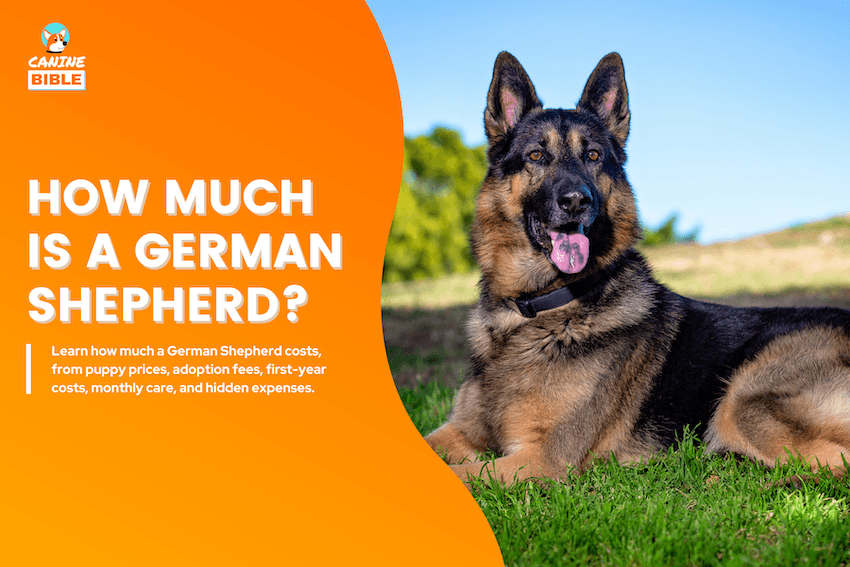
A German Shepherd typically costs $500 to $3,000 from a breeder, depending on pedigree, location, coat color, and breeder reputation. Adoption is usually much cheaper, often ranging from $50 to $500 through shelters or rescues. But the purchase price is only the beginning. German Shepherds are large, active, intelligent dogs with ongoing costs for food, training, vet care, grooming, supplies, and preventive health care. Some dogs cost more because of working-line bloodlines, show-quality parents, health testing, or professional training. Others may seem cheaper upfront, but become expensive if they come from poor breeding or develop preventable health issues. This guide breaks down the real cost of owning a German Shepherd, from puppy prices to lifetime expenses and hidden costs many new owners overlook.
What to Know Before Buying a German Shepherd
| Before You Buy | What to Expect |
|---|---|
| Higher upfront cost | A German Shepherd from a reputable breeder often costs more than many families first expect, especially from working or show bloodlines. |
| Health testing matters | Puppies from health-tested parents may cost more upfront but can lower the risk of costly inherited issues such as hip dysplasia, elbow dysplasia, and degenerative myelopathy. |
| Adoption costs less | Rescuing a German Shepherd is usually far cheaper than buying a puppy from a breeder, though training, vet care, and adjustment costs may still apply. |
| First-year expenses add up | Food, vaccines, supplies, training, socialization, and vet visits can make the first year much more expensive than the purchase price alone. |
| Grooming is ongoing | German Shepherds have dense double coats and shed year-round, so you should expect regular brushing, deshedding tools, or professional grooming costs. |
| Training is essential | German Shepherds are intelligent, powerful, and protective dogs, so early obedience training and socialization are important parts of the ownership budget. |
| Cheaper is not always better | A very low puppy price can sometimes signal poor breeding, missing health checks, weak temperament screening, or higher future medical and behavior costs. |
| Long-term ownership costs | Beyond buying the dog, you need to budget for years of quality food, preventive care, training, grooming, exercise needs, and unexpected medical bills. |
German Shepherd Puppy Price
Price Breakdown of German Shepherd Cost
The averages in the table are best viewed as planning numbers rather than exact totals. An average puppy price of $1,750 reflects the middle ground for a German Shepherd from a reputable source, but actual prices often fall below or above that depending on breeder reputation, pedigree, health testing, and location. The $1,350 average for initial supplies also covers a fairly complete setup, including both basic gear and early medical items, so owners who already have supplies at home may spend less, while those buying higher-end products or paying more for first-year vet care may spend more.
The $3,200 average yearly cost is a reasonable estimate for recurring essentials like food, preventive care, grooming, toys, and routine upkeep, but it does not mean every year will cost the same. Some years may stay close to that figure, while others can climb higher if training, dental care, emergency treatment, or chronic health issues come up. That is why the estimated lifetime cost of $38,500 should be treated as a long-term ownership average, not a guaranteed total, since a German Shepherd’s real lifetime cost can vary meaningfully based on lifespan, care choices, and medical needs.
Adoption vs Breeder German Shepherd Puppy Cost
A German Shepherd usually costs about $500 to $3,000+ from a reputable breeder, depending on the breeder’s reputation, pedigree, location, and what is included. Adoption is usually much cheaper, with many shelters and rescues charging around $50 to $500, though breed-specific rescues can be higher. That price gap is why it helps to look beyond the sticker price and understand what you are actually getting.


| Option | Typical Cost | What to Know |
|---|---|---|
| General shelter | $50–$500 | Usually the cheapest option, often with basic vetting included, though age, health history, and training needs can vary. |
| Breed rescue | $200–$800 | May cost more than a shelter, but German Shepherd rescues often provide added medical care, temperament notes, and foster-based insight. |
| Reputable breeder | $500–$3,000+ | Higher cost often reflects health screening, pedigree, working or show lines, temperament selection, and early puppy care. |
Adoption is usually the lower-cost route, while a reputable breeder is usually the more expensive route because you are often paying for health testing, pedigree, early care, and breeder support. Neither option is automatically better for every buyer, but the cost difference is significant.
German Shepherd Puppy Fixed Cost
This table shows the average one-time setup costs of bringing home a GSD puppy. These fixed costs mainly cover essential supplies and early veterinary care, though the actual total can vary depending on product quality, local vet pricing, and whether some items are already available at home.
| German Shepherd Puppy Fixed Cost Item | Average Cost |
|---|---|
| Crate | $120 |
| Bed | $70 |
| Food and water bowls | $30 |
| Collar, leash, and harness | $75 |
| ID tag | $15 |
| Puppy food | $95 |
| Treats and chews | $45 |
| Toys | $60 |
| Grooming supplies | $65 |
| Training pads and cleaning supplies | $45 |
| Baby gates or playpen | $130 |
| First vet visit and vaccines | $260 |
| Spay or neuter | $325 |
| Microchip | $50 |
| Initial Puppy Fixed Costs Total | $1,385 |
Ongoing German Shepherd Costs (Monthly & Yearly)
After the first year, German Shepherd costs usually become more predictable, but they do not stay low. Most owners should expect to keep paying for food, routine vet care, parasite prevention, grooming, treats, and replacement supplies, with the total often landing somewhere around $265+ per month and $3,410 per year, depending on the dog’s size, appetite, coat care needs, and local prices. Costs can also rise over time if your German Shepherd needs prescription food, more frequent grooming, dental care, allergy support, or ongoing medication. That is why it helps to think of this breed not just as a one-time purchase, but as a long-term monthly and yearly budget commitment.


| German Shepherd Ongoing Cost Item | Average Monthly Cost | Average Yearly Cost |
|---|---|---|
| Dry or fresh food | $75 | $900 |
| Treats and chews | $12 | $140 |
| Annual wellness exam | $13 | $150 |
| Routine vaccines and boosters | $10 | $120 |
| Flea, tick, and heartworm prevention | $23 | $275 |
| Pet insurance or emergency fund | $55 | $660 |
| Professional grooming or bathing supplies | $18 | $215 |
| Brushes, shampoo, ear cleaner, and nail care | $7 | $85 |
| Toys and chew replacements | $10 | $120 |
| Bed and gear replacement | $8 | $95 |
| Training refreshers and enrichment | $18 | $220 |
| Dental chews, toothbrush, and oral care | $8 | $95 |
| Routine fecal tests or lab work | $10 | $120 |
| Boarding, pet sitting, or dog walking | $18 | $215 |
| Average Ongoing Cost Total | $265 | $3,410 |
Best Place to Buy a German Shepherd Puppy
If you’re ready to bring home a German Shepherd, Pawrade and PuppySpot are two of the best-known resources for finding a GSD puppy in the U.S. Both platforms connect buyers with breeders and can make the search process more convenient, especially for families looking for available puppies from established breeding programs.
German Shepherd Cost vs Other Popular Breeds
What Makes Some German Shepherds More Expensive
The biggest cost differences usually come down to breeder quality, bloodline, health screening, and what is included before the puppy goes home. Responsible breeding is expensive, and that often shows up in the purchase price.
First-Year Cost of Owning a German Shepherd
The first year is usually the most expensive because you are paying both startup costs and normal care at the same time. For many owners, the total first-year cost of owning a German Shepherd can range from about $2,100 to $9,000+, depending on whether the dog comes from a shelter, rescue, or breeder. Costs can rise even higher for German Shepherd puppies from reputable breeders, working lines, show lines, or health-tested parents. Food, vet care, spay or neuter surgery, parasite prevention, grooming tools, training, durable supplies, and pet insurance all add to the first-year budget.
| Expense | Typical First-Year Cost | What It Covers |
|---|---|---|
| Purchase or adoption fee | $50–$3,000+ | Adoption fee or breeder price, with higher costs for reputable breeders, working lines, show lines, and health-tested puppies. |
| Food | $400–$1,000 | Large-breed puppy food, treats, and nutrition to support steady growth and joint development. |
| Initial vet care | $150–$450 | First exams, baseline health checks, deworming, and basic puppy health setup. |
| Vaccinations | $150–$300 | Puppy shots and boosters if they are not already included by the breeder, shelter, or rescue. |
| Spay or neuter | $250–$900 | Procedure cost varies by clinic, region, dog size, timing, and whether additional pre-surgical care is needed. |
| Parasite prevention | $180–$400 | Flea, tick, and heartworm prevention for a large, active breed. |
| Grooming | $120–$550 | Deshedding tools, brushes, shampoo, nail care, or professional grooming for a dense double coat. |
| Training | $150–$700 | Puppy classes, obedience training, leash manners, socialization, or added support for a strong working breed. |
| Crate and bed | $150–$400 | Large crate, durable bed, and safe confinement setup for a growing German Shepherd. |
| Collar, leash, bowls, toys | $120–$350 | Everyday supplies, durable chew toys, walking gear, feeding bowls, and basic enrichment items. |
| Pet insurance | $420–$960 | Monthly premiums if you enroll early, especially useful for a breed prone to orthopedic and inherited health risks. |
Food
German Shepherds are large dogs, so their food costs are usually noticeable even in the first year. How much to feed a GSD depends on your dog’s age, weight, growth stage, and activity level. The monthly food bill often rises because larger breeds need more calories and a steady supply of quality food to support healthy growth. Dog treats, chews, and occasional diet changes can also push the total higher than many owners expect.
Vet Visits and Vaccines
Some breeder puppies come with early vaccines and deworming already started, but many still need several follow-up visits during the first months. Puppy vaccine schedules are based on age and risk, so first-year medical costs can add up quickly if those services are not included upfront. That is why it helps to ask for full health records before you bring your German Shepherd home.
Supplies and Setup
The startup category is easy to underestimate because new owners often need a dog crate, bed, leash, collar, bowls, toys, dog brushes, other grooming tools, and cleaning basics right away. Even when each item seems small on its own, the combined setup cost in the first few weeks can be substantial. Buying durable essentials first usually helps keep this part of the budget more manageable.
Grooming
German Shepherds do not need elaborate coat styling or frequent haircuts, but they do have a dense double coat that sheds year-round and more heavily during seasonal coat blowouts. Regular brushing is important to remove loose undercoat, reduce shedding around the home, prevent tangles behind the ears and legs, and keep the skin and coat healthy.
Training
German Shepherds are known for being eager to please and highly trainable, but they still benefit from structured puppy training early on. Group classes are often the most budget-friendly way to build obedience, social skills, and good habits (i.e., potty training) from the start. Early socialization also matters, so training costs are usually worth including in the first-year budget.
Preventive Care
Flea, tick, and heartworm prevention are recurring costs, not one-time purchases, so they should be part of your regular budget from the start. The American Heartworm Society recommends year-round heartworm prevention, which is one reason this category can be easy to forget but expensive to skip. Preventive care may also include routine parasite testing and vet-recommended products based on your area.
Insurance or Emergency Savings
Some owners choose insurance, while others keep a separate emergency fund. Either way, planning for unexpected vet bills is smart because emergency care can get expensive fast. The average dog insurance runs about $46 per month for a $5,000 annual coverage plan and about $66 per month for unlimited annual coverage.
Other Potential German Shepherd Costs
Not every German Shepherd owner will face these costs every month, but they are worth planning for because GSDs are large, active, high-energy dogs. Travel care, daycare, advanced training, and emergency vet treatment can quickly raise the real cost of ownership beyond food, grooming, routine vet care, and prevention.
German Shepherd Health Conditions That Affect Costs
German Shepherds are generally strong, capable dogs, but the breed is associated with several inherited and commonly discussed health concerns that can affect long-term ownership costs. Responsible breeders commonly screen for hip dysplasia, elbow dysplasia, and temperament, and the AKC also notes that German Shepherds may be screened for issues such as degenerative myelopathy. Not every German Shepherd will develop these problems, but they are important to budget for because treatment, diagnostics, medication, and mobility care can become expensive over time.
Is a German Shepherd Worth the Cost?
A German Shepherd can be worth the cost for the right owner, but the real expense goes far beyond the initial price. Over the years, you also need to budget for food, grooming, training, preventive care, routine vet visits, and the possibility of larger medical bills if health problems come up.
What many owners get in return is a dog that is generally friendly, trainable, family-compatible, and adaptable to many roles. German Shepherds tend to do well in active homes that want a social, people-oriented dog and are willing to stay consistent with exercise, care, and structure.
That said, the breed may not feel worth the cost if you are not ready for the shedding, time commitment, ongoing expenses, and long-term responsibility. In most cases, a German Shepherd is worth the cost when your budget and lifestyle truly match what the breed needs.
Frequently Asked Questions
The Bottom Line
A German Shepherd can be affordable to adopt or expensive to buy, but the real cost goes far beyond the first payment. Between food, training, grooming, vet care, parasite prevention, insurance, and emergency expenses, this breed requires a realistic long-term budget. Choosing a reputable breeder or a responsible rescue can help reduce avoidable health and behavior risks. German Shepherds are intelligent, loyal, and highly capable dogs, but they need structure, exercise, and early training to thrive. For the right owner, the investment is worth it—but planning is the best way to give your German Shepherd a healthy, stable life.